Why Flying an Airbus A330 ATL-AMS Makes More Sense versus the A350
Original Research Report | Summer 2026
Why do airlines choose certain aircraft types for specific routes, and how does aircraft selection affect route profitability and operational economics?
Why might Delta find the Airbus A330-300/900neo economically preferable to the Airbus A350-900 on the Atlanta–Amsterdam route, despite the A350 being newer and more fuel-efficient?
This analysis proves that the newest or most fuel-efficient aircraft isn't automatically the most profitable aircraft for every route.
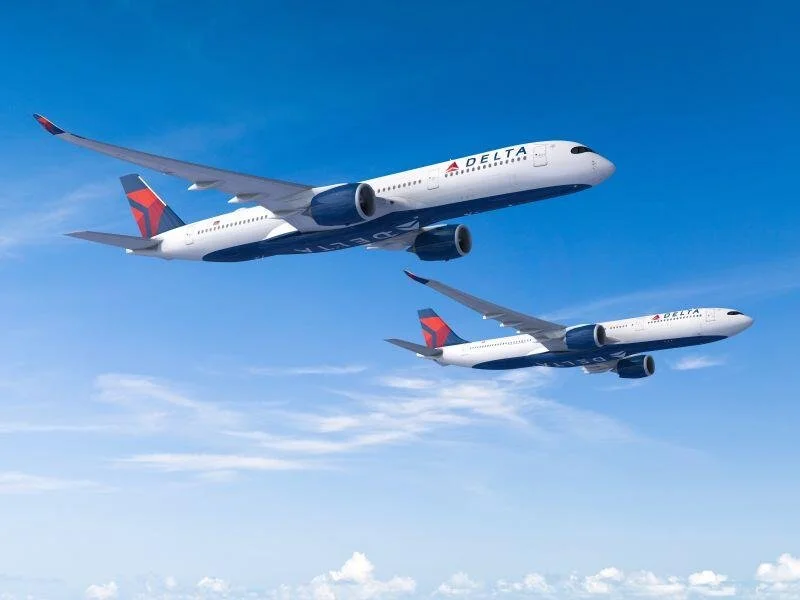
Delta Airlines’s Airbus A350-900 and Airbus A330-900neo
We’ll break down points around why flying the Airbus A330 family is economically smarter on the Atlanta to Amsterdam route versus the A350. The analysis prove that aircraft are usually made for specific “missions”, so throwing a jet onto any route comes with complications one may not initially consider.
Aircraft Economics are Route-Specific
Airlines are commercial businesses at the end of the day. So like any business, they are looking to maximize profit as holistically as possible. As a refresher, profit (what you actually keep at the end) is when your revenue (your total income from sales and other sources of money) is collected by your costs (expenses of the business and related costs). Formula: Revenue-costs = Profit.
So for an airline, an aircraft’s rendition of this is the revenue generated by the aircraft subtracted by the cost of operating that aircraft.
Broken down, that is Revenue (Passenger & Cargo) subtracted by Costs (fuel, crew, maintenance, airport fees, ownership/lease costs, other).
So in turn, the aircraft that gets placed on a route isn’t necessarily always the one with the lowest fuel burn. It’s the one that produces the best economic return for a mission. Missions are short 1hr hops, transcontinental & passenger dense routes, and of course, international routes that the A330 & A350 serves on.
A330 & A350 Comparison
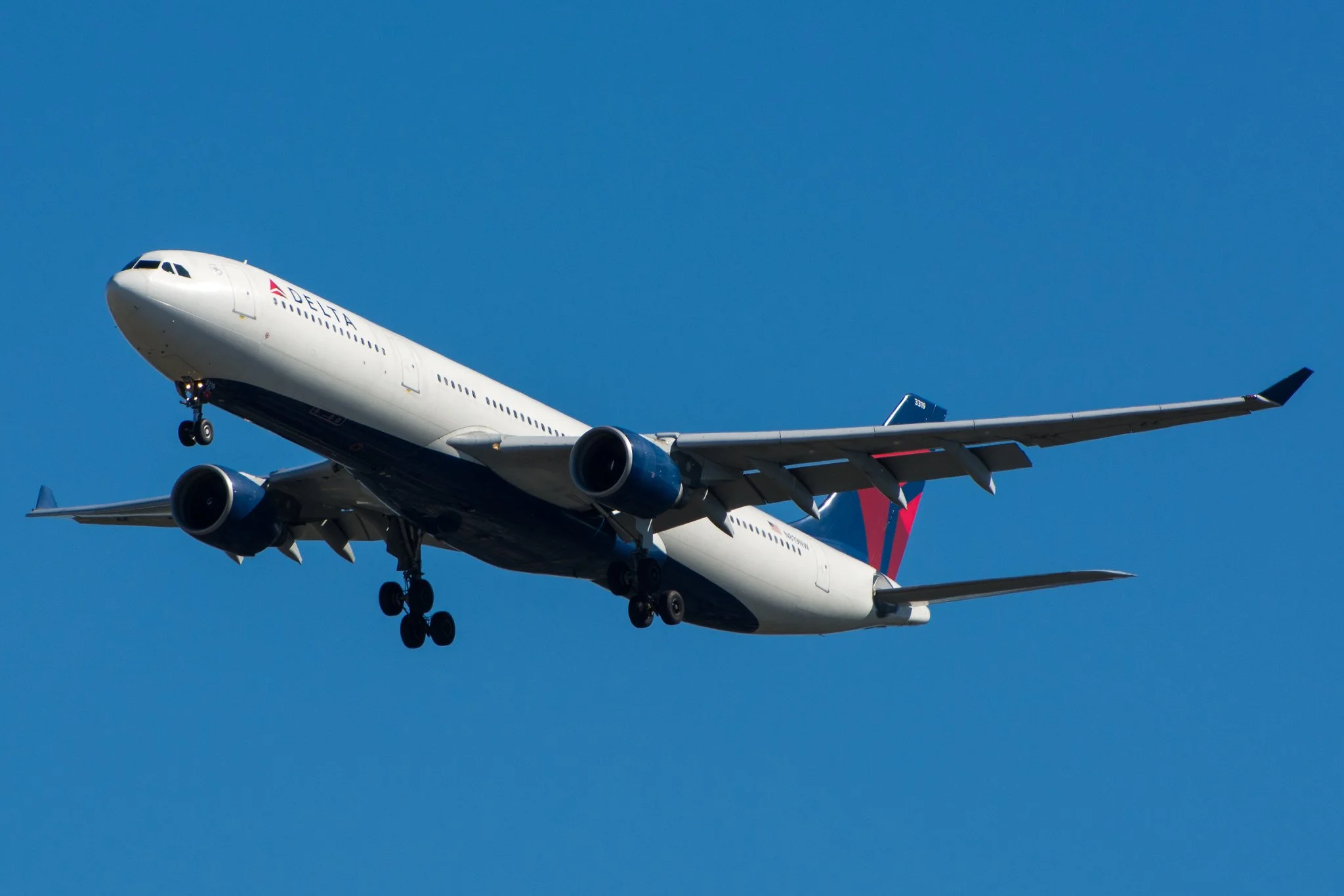
Stats on the Airbus A330
Older generation widebody
Lower acquisition/ownership cost
Large enough for long-haul routes
Proven maintenance infrastructure
Excellent cargo capability
Generally smaller than the A350-900
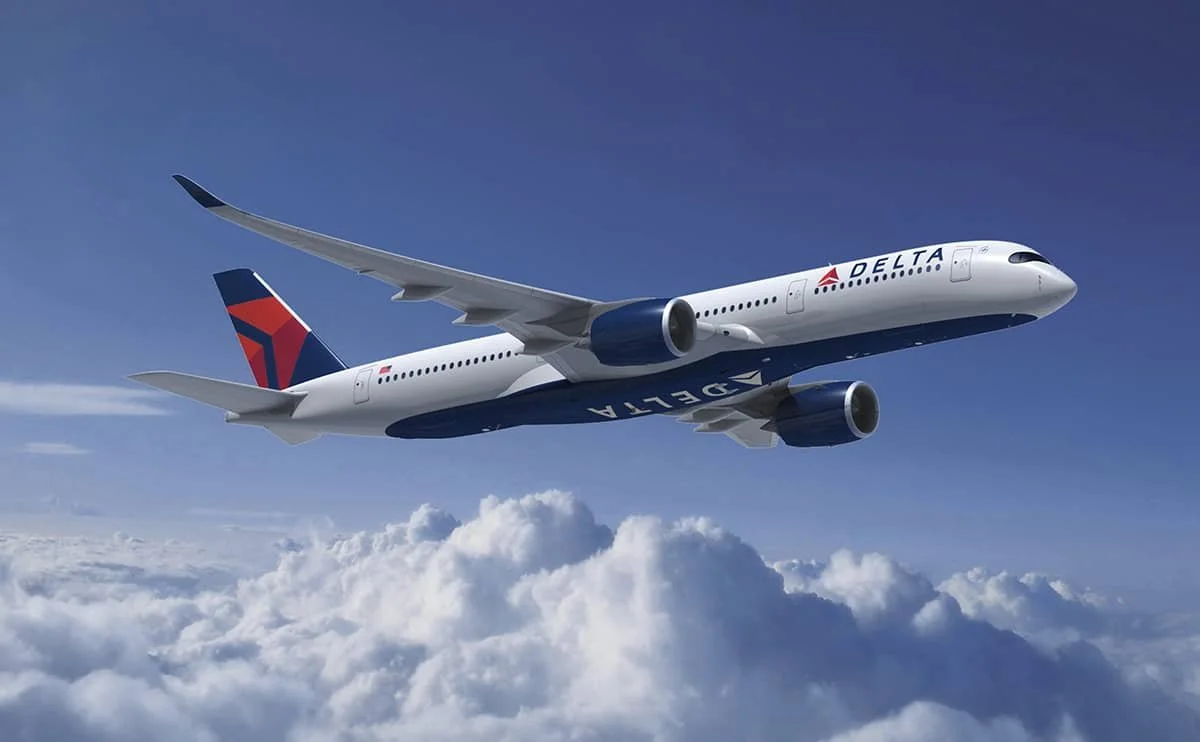
Stats on the Airbus A350
New generation widebody
Significantly better fuel efficiency
Larger range capability
More seats
Higher capital/ownership cost
Potentially higher revenue potential
Now at first glance, you might think the features of the A350 would make it a viable option for the Atlanta to Amsterdam route.
But it’s not.
Role Factor 1: Passenger Demand (Massive Role)
Okay so let’s give an example. On a given day, 250 passengers are expected to fly the Atlanta to Amsterdam route.
An A330 could accomodate that demand reasonably well. An A330-300 can seat 250-290, and an -900neo can seat 287 to 303 passengers.
However, an A350 has quite a bit more of seats. An A350-900 can seat 300 to 350. That’s a whole 50-100 seats that is wasted per passenger versus the A330 that could fill it up or have at least 85% filled. An A350 would fill 70%-83% max.
That % difference translates to thousands and millions down the line in a year. Remember, airlines are trying to maximize profit, so wasting thousands to millions on wasted seats is something a more fuel-efficient jet like the A350-900 is not going to beat out to an A330-300.
The A350 might have a lower cost per available seat mile (CASM), but altogether it looses money with the open 50-100 seats when the A350 could be flying a different route with that type of demand.
Role Factor 2: Cargo Demand
Atlanta to Amsterdam isn’t JUST a passenger route. It’s also a cargo route as well.
Remember where your luggage goes? The belly of the plane (under the passenger cabin). That lower deck can carry freight and cargo revenue can materially influence aircraft selection.
Model formula for routes is Passenger rev + cargo rev - operating costs = route contribution.
An aircraft with more cargo space could outperform a competing aircraft even with similar passenger economics.
Remember, anything else you could think of that can be mailed likely is being flown between massive cities. Trade (import and exports of goods) is happening 24/7/365. So big hubs like Atlanta and Amsterdam are moving more than passengers. Examples include machinery, pharmaceuticals, high-value goods, etc.
Role Factor 3: Frequency
This also becomes a huge variable in aircraft-route economics.
Suppose Delta has a choice: 1 A350 a day or 2 smaller widebodies a day (like an A330 or 767)
Even IF the A350 is cheaper per seat, passengers given more daily options is more attractive and can cover more passengers versus one flight.
An 830AM and 7PM travel option is way more appealing than a 2PM only option. People have education, jobs, families, and time preferences, so giving passengers more options can cater to a broader passenger base. A 2PM option does not account for education, work, family commitments, and if someone is opting to arrive in at a certain time window.
Airlines, therefore, are not simply optimizing aircraft. They are optimizing their network schedule and their chances of gaining passengers.
Role Factor 4: “Right-Sizing”
An airline wants to do the following: fly an aircraft on a route that is large enough to capture demand while not exceeding capacity demands that could destroy yields.
It’s simple economics. Demand needs to meet supply so you are not operating outside your possibilities production frontier. Having a surplus (when supply > demand) means wasted resources. Having a shortage (supply < demand) means not having enough resources.
This demand and supply relationship is what every business uses. Airlines included. Including Delta on the ATL-AMS route with the A330 vs A350.
So, an A350 would lead to a surplus, more supply of seating compared to the demand. An A330 would be supply = demand, where there is enough demand for the 250-290 capacity when passenger numbers frequently are within their seating capacity.
Role Factor 5: Utilization
Question: How much time does an aircraft spend flying? Because when it flies, that’s when the money can be made.
An aircraft is an EXPENSIVE asset. Many airlines lease their jets. Delta is known to buy older jets and refurbish them.
A brand new A350 can costs between $300million and $366million. That’s not cheap for any airline. An airline is going to do payment plans, regardless if it’s finance or lease. It’s a long-term investment. So, you want that aircraft optimizing its full capabilities and flying as often as possible.
With Delta having both the A330 and A350, it wants them optimizing its full capabilities and flying as often as possible.
Think of it like this:
A350: 7000+ miles, high demand, 14hr utilization cycles
A330-300: 6300 miles, lower demand than an A350, more flexible deployment and shorter utilization cycles
The A350 would be more attractive on longer & dense routes. The ATL to AMS route is just under 8 hours, up to 10 AMS to ATL. The A330 covers the route (around 4400 miles) well. Range and demand fits the route well. The A350 would be wasting its potential. Routes like ATL to HND (Tokyo; Haneda) that’s 14hrs and is frequently hitting numbers between 300 and 350 passengers is why Delta has the type deployed on that route.
It would be an opportunity costs to fly the A350 on the ATL-AMS when it could be flying ATL-HND.
Also, the A350’s are new aircraft Delta is paying on. The A330ceos (-200/300 variants) are more into their payment plans (some are from the 2008 merger with Northwest) versus the newer A330neos (-800/900 variants) and A350s. That goes into those operating costs airlines factor in when deploying aircraft on certain routes.
Role Factor 6: Fleet Commonality
Airlines evaluate aircraft as fleets versus individual planes (Delta has about 1k planes in their fleet).
If Delta already has A330ceo:
Pilots
Maintenance Infrastructure
Spare Parts
Simulators
Trained mechanics
Existing financing/leasing,
then they have an economic advantage to operate the type. Especially when they started adding A330neo to their fleet, it’s fleet commonality. Southwest Airlines does it with their 737-only fleet between the NGs (-700/800/900 variants) and MAXs. It reduces costs, training, and maintenance complexity.
Role Factor 7: Airport Economics (Understated)
Airlines have to pay airport related costs.
That can include landing fees, handling costs, gate requirements, passenger processing, ground handling, deicing, noise-related charges, and parking costs.
So even if an A350 is more efficient in the air, ground economics can be what makes an airline think twice about an aircraft on certain routes.
That leaves you with aircraft operating economics vs. aircraft total system economics.
Conclusion: Route Determines Aircraft
With all the 7 factors (airport economics, fleet commonality, utilization, right-sizing, frequency, cargo & passenger demand), it all boils down to which aircraft fits the mission of the route while supply = demand and efficiency is not compromised. Remember, efficiency is NOT only fuel!
The A330 fits the ATL-AMS route because it meets the demand, the A330neos are fleet mixing with the A330ceos well, and it’s being utilized constantly. The A350 fits the ATL-HND mission well, and Delta is not loosing money with these deployments. It’s able to maximize its profits and give passengers flexible options to travel internationally.
The A350 was built for bigger missions like ATL-HND, not ATL-AMS. The A330 was built for missions such as ATL-AMS.
So the next time you fly a certain aircraft constantly on a route, remember all these factors. It will help explain that question in ways you probably never thought of before.
