Post-Pandemic Travel Boom: How Airlines Are Racing to Rebuild Capacity to Meet the Resurgent Demand
Original Research Report | Summer 2026
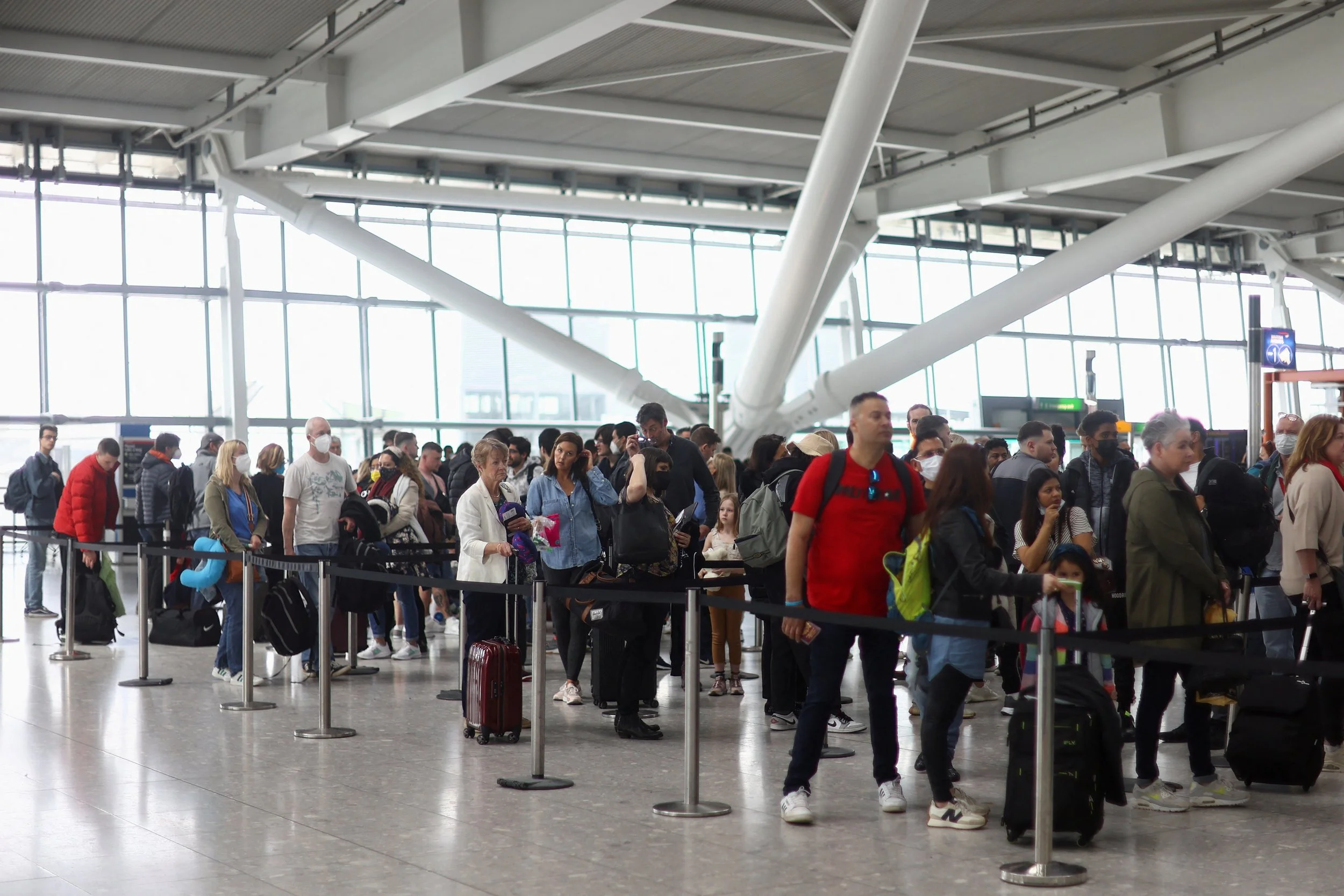
The pandemic in 2020 put a halt to daily operations for airlines and all businesses worldwide. However, airlines had another challenge post-pandemic: resurgence of travel plus exceeding pre-pandemic loads. Airlines are on the race to meet the demand as flying is becoming more common.
According to IATA, global passenger demand reached a new record. RPKs (revenue passenger kilometers) rose 10.4% compared to 2023. That % is 3.8% higher than pre-pandemic levels. In 2025, there was a 7.1% growth in international travel. This all was happening as airlines was dealing with aircraft/engine delivery problems, maintenance constraints, and supply chain disruptions. Airlines had to keep aircraft flying that was generally old (20 years or older) to keep up with demand until newer aircraft was certified to fly.
That’s the start of this objective to meet the demand: fleet constraints via delays of newer aircraft and availability of aircraft to meet demand.
Let’s frame this in a chain of events, shall we?
COVID-19 → Travel restrictions → Airline demand capacity collapses → Airlines retire aircraft / defer orders / shrink networks → borders reopen → Pent-up demand for travel EXPLODES → Passengers surge back to flying exceeding capacity → high load factors + strong fares → Airlines want more aircraft → Airbus/Boeing can’t magically deliver a new/more aircraft tomorrow with supply chain disruptions → Airlines squeeze more utilization out of existing fleets (keep older aircraft flying/bring some out of storage) → Eventual new aircraft & restored routes → Seat capacity eventually meets demand
So currently, it’s safe to say the market is between airlines squeezing more utilization and new aircraft. With the Airbus A321XLR, Airbus A350-1000 testing for London-Sydney route, Boeing 777X wrapping up it’s certifications, and Boeing MAX7 being recently certified, airlines are starting to receive aircraft that they have been planning route networks for.
So how did airlines meet the demand?
For this analysis, we are going to have our airline subjects as Delta, United, and American Airlines.
United Airlines
In 2025, United operated nearly 700 international flights per day to 133 destinations in 67 countries. Their international schedule was 35% larger than the other two carriers, Delta and American.
It dove into new markets such as:
Nuuk
Faro
Dakar
Madeira
and more
United was not thinking of How do we go back to flying like we did in 2019?, they reassessed demand and wanted to know How do we meet this resurgent demand so we can be ready to fly in the future and now?
By the end of 2024, it was clear United was committed to keeping up with the new demand. They had firm commitments for hundreds of new aircraft, including:
787s
A321neos
A321XLRs
A350s
MAX9s & MAX10s
This is not just United throwing aircraft into their fleet, they are aiming to renew part of their fleet (MAXs and A321neos) while also meeting the rising demand for international travel while meeting efficiency targets (A350s and 787s).
Demand recovery → aggressive network expansion → grows frequencies/routes → acquire aircraft → increase gauge & connectivity
Delta Airlines
Now Delta did expand, just not in the same way United did. In 2024, Delta had 975 mainline aircraft with an average age of about 15 years old. They had 294 firm orders for aircraft plus 120 options, a stark contrast from United’s 660+ order log. Those aircraft included:
86 A321neos
7 A330-900neos
9 A350-900s
20 A350-1000s
100 737 MAX10s
72 A220-300s
a number of 787s coming in 2030
The orders are telling a story. With aging 737 NGs, 757s, 767s, 717s, and even of the A320 family, newer aircraft with better efficiency and same, if not better, performance and capability means fleet modernization was inevitable. Delta is known to take jets and use them longer than United and American likely would (Delta TechOps, their maintenance division). Delta and United still uses 757s and 767s, but only Delta uses the 717s. After a while, those 20+ year airliners need to rest and retire.
That’s why this order is so important: it signals the arrival of fleet modernization United and American has seemingly embraced earlier.
They are began adding new routes in 2024 such as:
Tampa-Amsterdam
Orlando-London
NYC-Lagos
This shows Delta began to put capacity into markets where they believe the revenue opportunity justified it, while simultaneously modernizing the fleet and strengthening premium/network connectivity.
American Airlines
American did adapt…eventually. In 2023-24, American actually paused network growth. A reason for this was because of aircraft delivery delays.
In it’s 2024 annual report, American managed demand by exiting underperforming markets, adjusting flight frequencies, and adding new markets with substantial demand.
Then, in March 2024, American made the commitment to new aircraft.
85 Airbus A321neos
85 Boeing 737 MAX10s
90 Embraer E175s
Now, American noted something with it’s product: demand for premium economy. In August 2026, American announced they would increase premium seating on narrowbody aircraft roughly 25%-40% over the next several years. They also decided to bring back in-flight entertainment.
Conclusion
The COVID-19 pandemic halted everything. Trade, socialization, progression, everything. Airlines suffered low to no passenger traffic, and yet they still owed money to have aircraft parked and keep leasing.
However, no airline was necessarily ready for the SURGE of travel that was awaiting them once restrictions lifted. Thy had to meet demand that they was not expecting so soon.
Sources:
https://www.sec.gov/Archives/edgar/data/27904/000002790425000004/dal-20241231.htm?utm_
https://www.sec.gov/Archives/edgar/data/100517/000010051725000046/ual-20241231.htm?utm_
https://www.sec.gov/Archives/edgar/data/100517/000010051725000013/ual_12312024erex991.htm?utm_
https://simpleflying.com/united-airlines-new-aircraft-2025/
https://news.delta.com/delta-grows-airbus-widebody-fleet-new-order
