Airport-Airline Partnerships: How Strategic Hubs Shape the World's Leading Airlines
A Comparative Analysis of Delta Air Lines, United Airlines, KLM Royal Dutch Airlines, and Virgin Atlantic
Original Research Report | Summer 2026
Executive Summary of Analysis
The relationship between an airline and its primary airport extends far beyond aircraft operations. Successful airline-airport partnerships influence economic development, tourism, infrastructure investment, corporate relocation, and international connectivity. This analysis examines four of the world's most influential partnerships: Delta Air Lines and Hartsfield–Jackson Atlanta International Airport, United Airlines and Chicago O'Hare International Airport, KLM Royal Dutch Airlines and Amsterdam Airport Schiphol, and Virgin Atlantic and London Heathrow Airport, to demonstrate how coordinated growth between airlines and airports creates global transportation networks that shape cities and national economies.
Drawing upon operational data, historical development, and strategic analysis compiled throughout this research, the analysis compares how each collaboration has produced long-term competitive advantages.
Introduction
Airports are often viewed as infrastructure, while airlines are seen as transportation companies. In reality, the two function as strategic partners. An airport provides the physical capacity, geographic accessibility, and passenger experience necessary for airline growth, while airlines generate passenger traffic, economic activity, and global visibility for their hub cities.
Few partnerships illustrate this relationship better than Delta and Atlanta, United and Chicago O'Hare, KLM and Amsterdam Schiphol, and Virgin Atlantic and London Heathrow. Each represents a unique model of collaboration shaped by geography, history, and long-term investment. Together, these partnerships demonstrate how aviation can influence regional development, global commerce, tourism, and international competitiveness.
Research Objectives
Why do airlines concentrate operations at specific airports?
How do airports benefit from airline hub development?
What economic value is created through these partnerships?
How do airlines and airports jointly market destinations?
What lessons can other airports learn from these four case studies?
Analysis of Airlines x Airports
Delta
Amsterdam
KLM
Hartsfield-Jackson
Schiphol
Atlanta
Virgin Atlantic
Heathrow
London
United
Chicago
O'Hare
Delta Amsterdam KLM Hartsfield-Jackson Schiphol Atlanta Virgin Atlantic Heathrow London United Chicago O'Hare
Delta Air Lines x Hartsfield-Jackson Atlanta International Airport (SkyTeam Alliance)
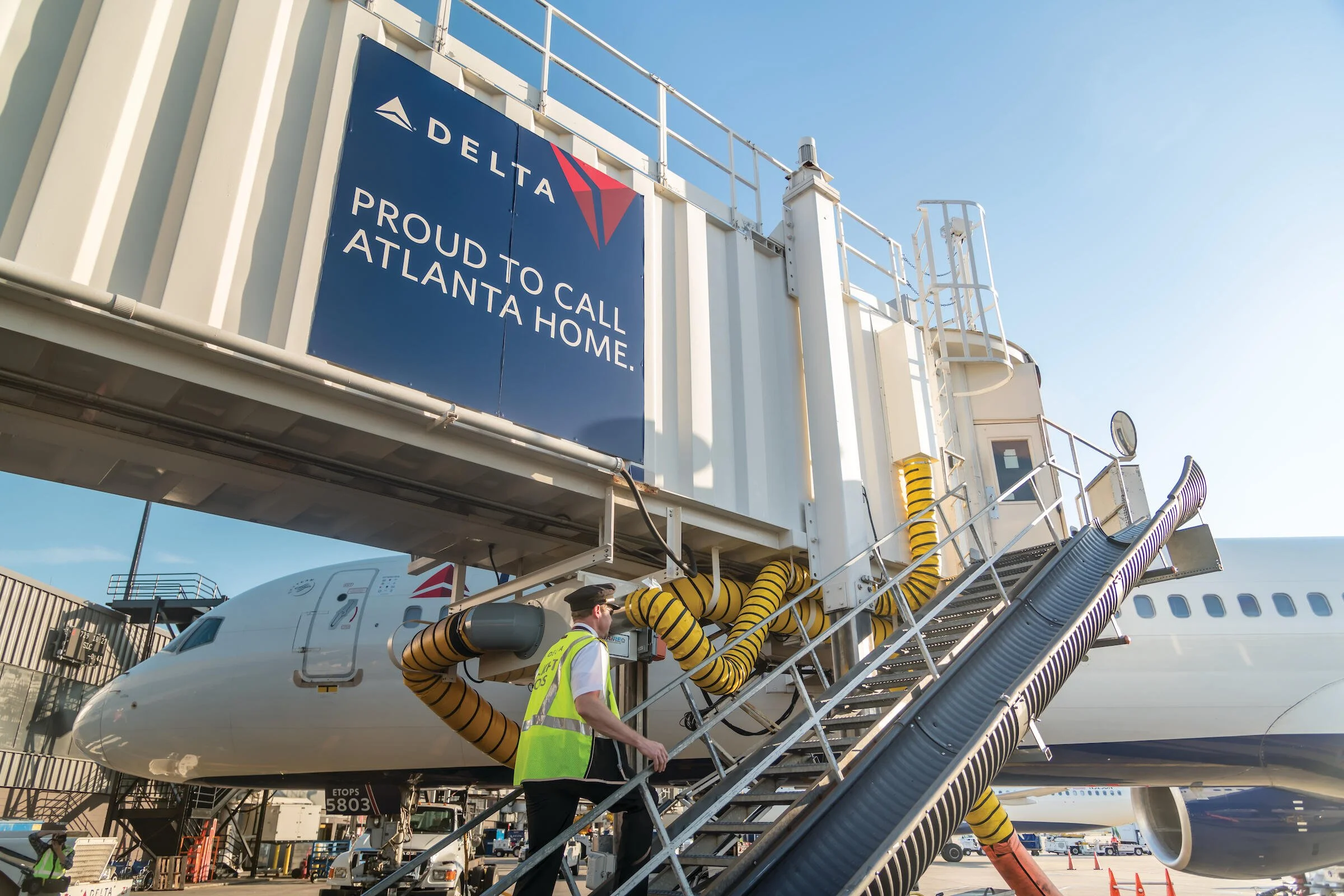
Few airline-airport partnerships have been as mutually transformative as that of Delta Air Lines and Hartsfield–Jackson Atlanta International Airport. Over the past century, Delta's growth into one of the world's largest airlines has mirrored Atlanta's emergence as the busiest airport on Earth. Together, the two organizations have created a transportation ecosystem that serves more than 300 destinations, supports tens of thousands of jobs, and positions Atlanta as one of the world's premier aviation gateways.
Headquarters/SuperHub: Atlanta, Georgia/Hartsfield-Jackson
SuperHub Passenger Stats: 106million+ (2025)
Other hubs: Minneapolis-St. Paul, JFK-LaGuardia, Detroit
Frequently used aircraft: Airbus A321 family, Boeing 737-900ER, Airbus A220
Fleet size: 1000+
Connectivity: 300+ Domestic & International destinations
Impact: Hartsfield generates $34.8billion for the Atlanta metro, 63,000+ jobs at the airport, and roughly 286,000 passengers daily
Delta established Atlanta as its primary hub because of the city's strategic location in the southeastern United States, allowing efficient connections between East-West and North-South routes. Atlanta's growing economy and population also created strong local demand for passenger travel.
As Delta expanded into one of the world's largest airlines, Atlanta evolved into the world's busiest airport. The airline's continued investment attracted businesses, tourism, and international service, while the airport expanded to accommodate Delta's growing network.
ATL has continuously expanded through additional concourses, runway construction, and modernization projects to support increasing passenger demand. Many of these improvements were designed around Delta's role as the airport's largest carrier.
Delta has invested heavily in Terminal South, premium lounges, gate modernization, baggage systems, and customer technology. These improvements have strengthened Atlanta's reputation as Delta's flagship hub.
Delta and Atlanta are closely identified with one another, with the airline serving as one of the city's largest employers and global ambassadors. Together, they market Atlanta as a premier gateway for domestic and international travel.

United Airlines x Chicago O’Hare International Airport (Star Alliance)
Chicago's central geographic location has long made it one of North America's most valuable aviation crossroads. United Airlines leveraged this advantage to build one of the world's largest hub-and-spoke systems, while O'Hare expanded into one of the busiest and most connected airports on the planet. Together, the airline and airport illustrate how strategic geography can become a lasting competitive advantage.
Headquarters/SuperHub: Chicago, Illinois/O’Hare
SuperHub Passenger Stats: 84million+ (2025)
Other hubs: San Francisco, Houston-Intercontinental, Newark-Liberty
Frequently used aircraft: Boeing 737-800 & 900, Boeing 737MAX 8&9, Boeing 787 Dreamliner
Fleet size: 1100+
Connectivity: 400+ Domestic & International destinations
Impact: Positioned as the aviation capital of the Midwest, 18k+ jobs at United, billions in economic impact in the Chicagoland metro
United selected Chicago because of its central location within the United States, making it ideal for connecting passengers between both coasts and international markets. O'Hare's extensive runway system and large metropolitan economy further supported United's long-term hub strategy.
United's growth helped establish O'Hare as one of North America's busiest airports, while the airport's expansion enabled United to develop one of the world's largest route networks. Their partnership has strengthened Chicago's position as a global aviation and business center.
O'Hare has undergone major modernization through new runways, terminal improvements, and the ongoing O'Hare 21 redevelopment program. These projects increase capacity while supporting United's continued operational growth.
United has invested billions of dollars into Terminal 1 through gate renovations, expanded United Club lounges, digital technology, and operational improvements. The airline is also a major participant in O'Hare's future terminal redevelopment.
United and Chicago share a strong global identity, with the airline using the city as one of its principal international gateways. Their partnership promotes Chicago as both a major business destination and one of the world's leading aviation hubs.
KLM Royal Dutch Airlines x Schiphol Airport (SkyTeam Alliance)
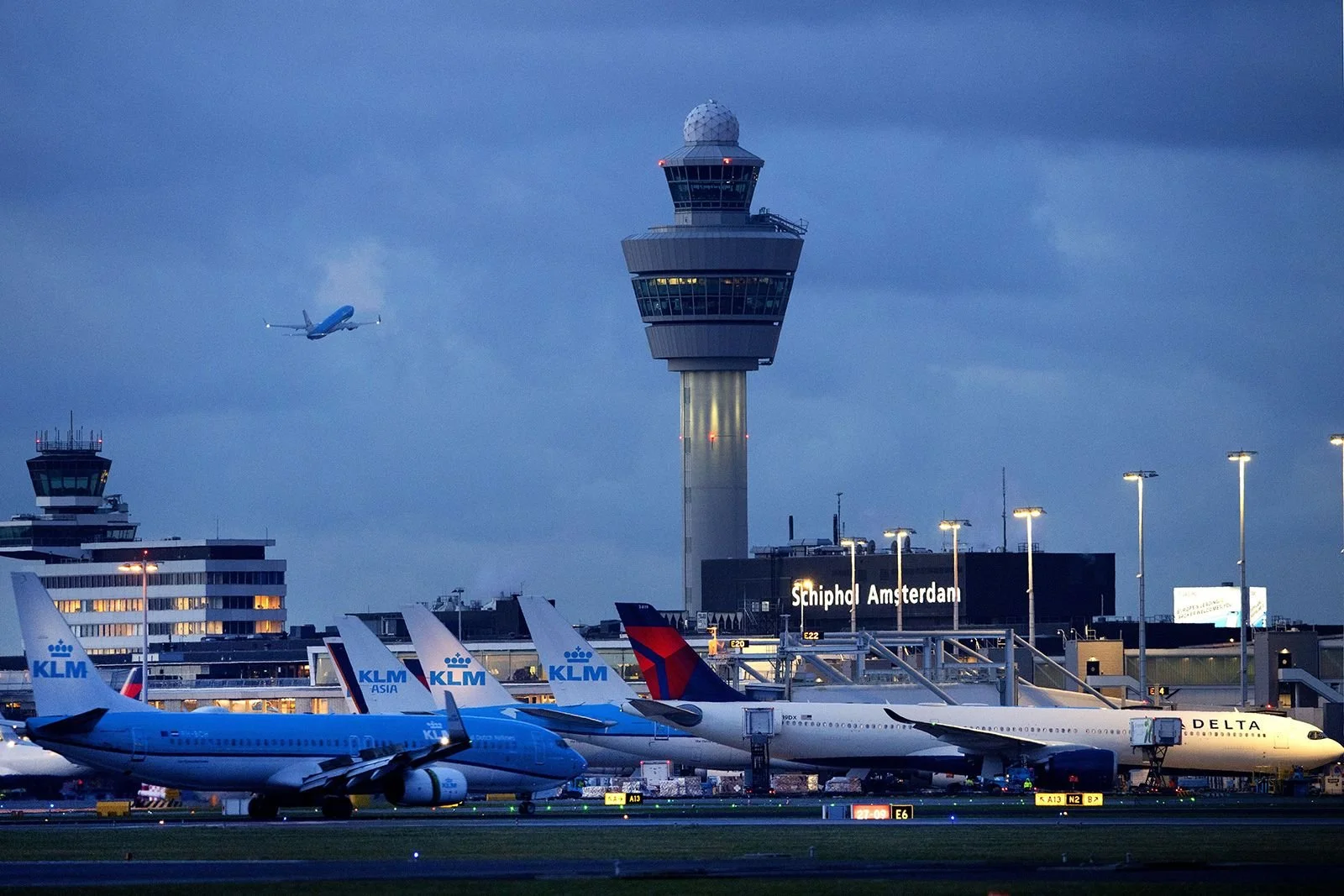
KLM is the world's oldest airline still operating under its original name. From its Schiphol hub, the airline connects Europe with North America, South America, Africa, Asia, and the Middle East. Together with Air France, KLM forms one of Europe's largest airline groups and remains a founding member of SkyTeam. Schiphol functions as the airline's primary global hub, with coordinated connections between European feeder flights and long-haul services.
Headquarters/SuperHub: Amsterdam, Netherlands/Schiphol
SuperHub Passenger Stats: 68million+ (2025)
Other hubs: Partner hub at Charles de Gaulle Airport (Paris, France alongside partnership with Air France with the Air France-KLM Group)
Frequently used aircraft: Boeing 737-800 & 900, Embraer E195-E2, Boeing 787 Dreamliner
Fleet size: 120+
Connectivity: 160+ Domestic & International destinations
Impact: Amsterdam Schiphol is Europe's premier transfer hub and serves more than 160 destinations worldwide. The airport handles roughly 70 million passengers annually and is one of the Netherlands' most important economic assets, supporting tourism, international trade, logistics, and employment. Schiphol's single-terminal design allows efficient transfers and has helped establish Amsterdam as a major global aviation gateway.
KLM built its operations around Amsterdam because of the Netherlands' historic role in international trade and its central location within Europe. Schiphol provides efficient access to European destinations while supporting long-haul connections worldwide.
KLM and Schiphol have developed together for more than a century, transforming Amsterdam into one of Europe's leading connecting hubs. The airline's global expansion directly contributed to Schiphol's growth as an international gateway.
Schiphol has expanded through additional piers, terminals, cargo facilities, and passenger services while maintaining its efficient single-terminal concept. These developments have improved transfer times and increased operational capacity.
KLM has invested in premium lounges, self-service technologies, baggage handling, and passenger experience improvements throughout Schiphol. These enhancements reinforce the airport's reputation for efficient international connections.
KLM and Schiphol are internationally recognized as symbols of Dutch aviation and hospitality. Together, they promote Amsterdam as one of Europe's most accessible and passenger-friendly global hubs.
Virgin Atlantic x London Heathrow Airport (SkyTeam Alliance)
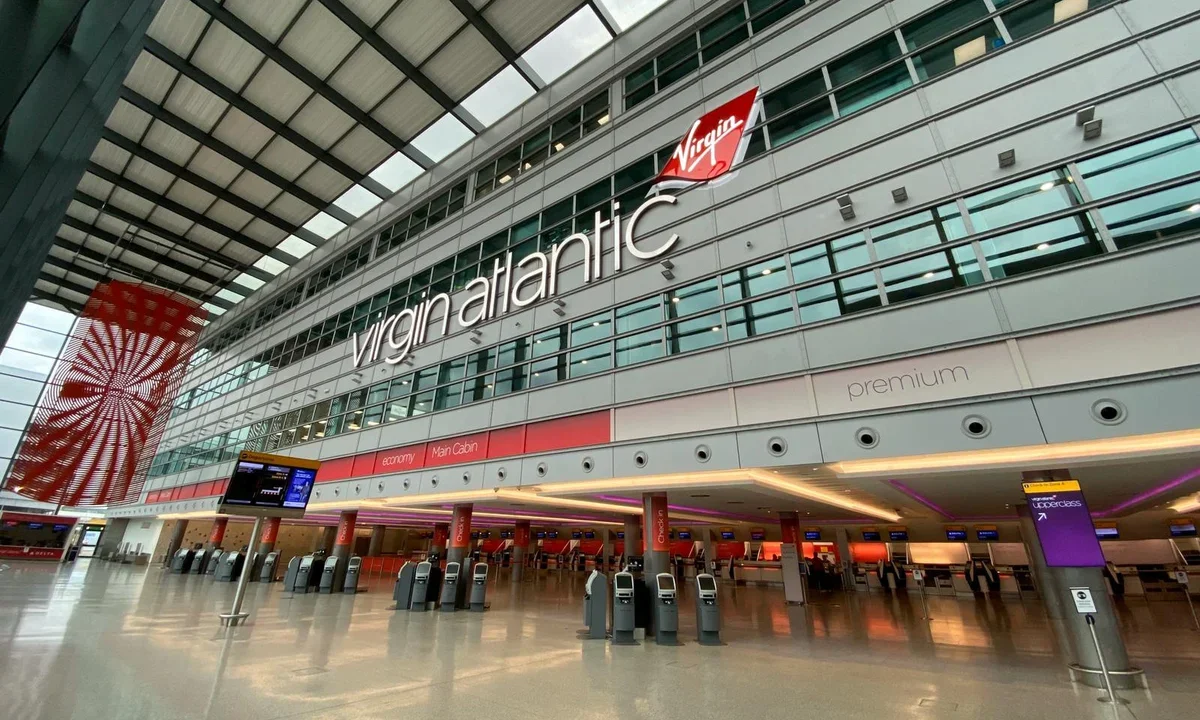
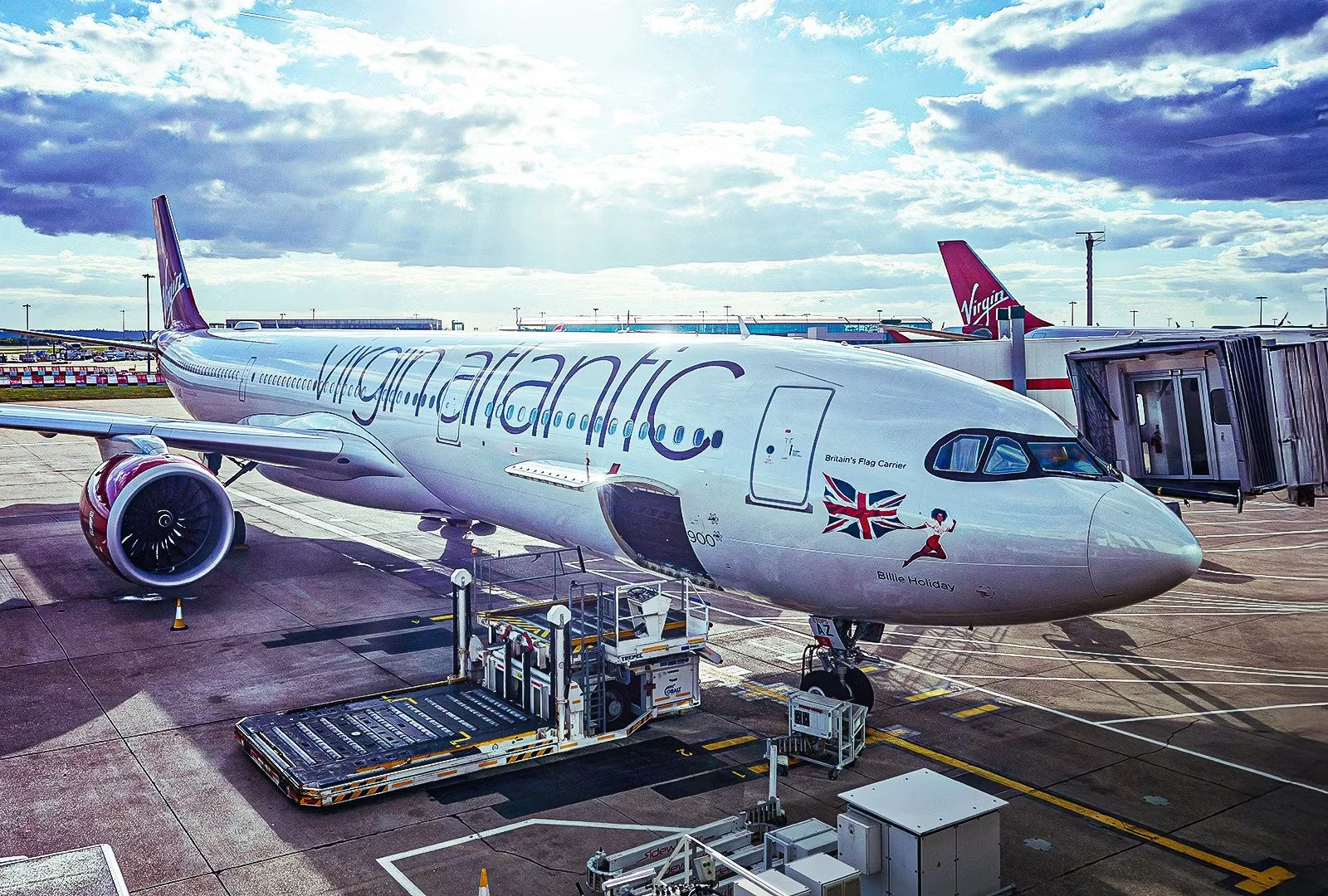
Virgin Atlantic specializes in premium long-haul international travel, operating from its primary hub at London Heathrow. The airline serves destinations throughout North America, the Caribbean, Africa, Asia, and the Middle East using a modern fleet of Airbus A350-1000s, A330-900neos, and Boeing 787-9 Dreamliners. Since joining SkyTeam in 2023, Virgin Atlantic has expanded global connectivity through partnerships with Delta Air Lines, Air France, and KLM.
Headquarters/SuperHub: London, England/Heathrow
SuperHub Passenger Stats: 83million+ (2024)
Other hubs: Manchester
Frequently used aircraft: Airbus A350-1000, Airbus A330-900neo, Boeing 787-9 Dreamliner
Fleet size: 40+
Connectivity: 25+ Domestic & International destinations
Impact: London Heathrow is the United Kingdom's busiest airport and Europe's leading long-haul hub. Serving more than 200 destinations worldwide, Heathrow processes over 80 million passengers annually and plays a critical role in global business, tourism, and international trade. Its extensive route network makes it one of the world's most important intercontinental gateways.
Virgin Atlantic established Heathrow as its primary hub because it is the United Kingdom's largest international airport and offers unmatched access to global markets. The airport's strong demand for premium business and leisure travel aligns with Virgin Atlantic's long-haul strategy.
As Virgin Atlantic expanded its international network, Heathrow became increasingly important as its primary operating base. Their partnership has strengthened London's position as one of the world's leading long-haul aviation gateways.
Heathrow has continually invested in terminal modernization, runway efficiency, and passenger facilities to accommodate growing international demand. These improvements have supported Virgin Atlantic's expanding long-haul operations.
Virgin Atlantic has made significant investments in Heathrow's Terminal 3, including its flagship Clubhouse lounge, premium check-in facilities, and customer experience enhancements. These investments reflect the airline's focus on premium service and brand differentiation.
Virgin Atlantic and Heathrow are closely associated with premium international travel from the United Kingdom. Together, they project London as a global aviation gateway while emphasizing innovation, customer service, and international connectivity.
